Operating Model
Team Structure
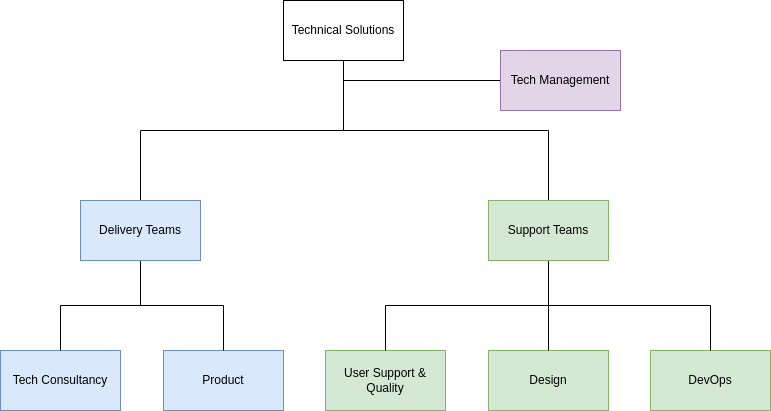
The Technical Solutions team is unique in the sense that it federates a very wide range of skills and expertise (inherent complexity of building software). Due to our team’s size, some domains of expertise are led by a single person, resulting in one-person teams. We see this as a temporary situation but find it necessary to formalize these teams as the services they provide are essential to our collective success.
The Technical Solutions team is composed of 2 types of teams:
-
Mission Teams - They execute the core operational goals of Akvo, i.e. build software for impact.
-
Support Teams - They provide centralized domain expertise that is required for the Mission teams to achieve their goals.
-
Hybrid Teams - They execute the mission and provides support capacity to the organization
Each team is described in a table with the following attributes:
-
Mandate - A summary of what the team does at/for Akvo
-
Offers - The services that the team offers
-
Needs - The information, tools and services needed for that team to deliver its function
-
KPIs - The KPIs that will be used to measure the performance and success of the team. In some instances, we’ve also described a number of metrics that reflect the volume of work.
-
Lead - The person accountable for the team
-
Coordination - The frequency with which the coordination meeting is held.
- Task Tracking - The place where work is tracked and coordinated (Asana).
Mission Teams
TC Team
|
Tech Consultancy Team
|
|
Mandate
|
|
|
Offers
|
BD
-
Explore partnership collaboration
-
ToR evaluation (Go, No Go)
-
Technical proposal writing (Budgets, Timelines)
-
Tech PoC for concepts provided by sector leads
Delivery
|
|
Needs
|
Information
Tools
Services
-
Hosting
-
Design
-
Testing
-
User support
|
|
KPIs
|
Execution Efficiency
Team Utilization
Team Billability
Unit Test Coverage
Integration Test Coverage
User reported bugs
|
|
Lead
|
Joy Ghosh
|
|
Coordination
|
-
Project issue board on GH
-
3 times a week tasks status / adhoc as required
-
Bi-weekly team status check
|
|
Task Tracking
|
Each project has its own Asana Team or Project
|
Product Teams
| Product Teams |
|
Mandate
|
- Build, maintain and provide user support of current Akvo products (FLOW, RSR).
- Develop new products based on market needs.
|
|
Offers
|
-
Product development
-
Product management
|
|
Needs
|
Information
-
Market data
-
User feedback
Tools
Services
-
Hosting
-
Design
-
Testing
-
User support
|
|
KPIs
|
Bug Reports
User Acquisition
User Engagement
Revenue
Customer Satisfaction
|
|
Lead
|
Guillaume Deflaux
|
|
Coordination
|
Every 2 weeks - Guillaume Deflaux Zuhdil Kurnia
|
|
Task Tracking
|
RSR Project in Asana
FLOW Project in Asana
|
Support Teams
DevOps Team
|
DevOps Team
|
|
Mandate
|
|
|
Offers
|
Security for internal and external systems (Company-wide)
Infrastructure (TC Platforms / Products)
-
Design
-
Deployment
-
Support & Monitoring
-
Costing
Knowledge Management & Company Culture
-
Updated technical documentation (wiki) covering the above topics (SOPs, best practices, …)
-
Provide DevOps & Security trainings internally
-
Promote a DevOps & Security culture
-
Domain technical watch (best practices, tools, …)
|
|
Needs
|
Information
-
Product/project software architecture plan (before development started)
-
Product/project software architecture documentation
-
Product/project system requirements and quickstart documentation
-
Infrastructure budget allocation plan from product, project or BD team
Tools
-
Hosting provider (Google Cloud, Contabo, Siteground)
-
Code Version Control (Github)
-
CI/CD Tools (SemaphoreCI, CircleCI, Github Action)
-
Documentation tools
-
Infrastructure orchestration and configuration management tools (Terraform, Ansible)
-
Secret management tools (Hashicorp Vault, Vaultwarden)
-
Maling tools (Mailjet)
-
Workflow automation (N8N)
Services
|
|
KPIs
|
Average Service Availability
Change Success Rate
-
Definition: Changes made by the DevOps team do not result in any downtime or other issues.
-
Target: 90% over a quarter
-
Source: uptime checks, CI/CD
-
Note: downtime caused by deployments are not taken into account
Cost
-
Definition: Amount that we spend on cloud services (mostly GCP)
-
Target: Yearly targets based usage of services (COGS, cost per project…). Still TBD
Team Satisfaction
|
|
Lead
|
Anjar Fiandriato
|
|
Coordination
|
Every 2 weeks - Guillaume Deflaux Anjar Fiandriato
|
|
Task Tracking
|
DevOps Project in Asana
|
Design Team
|
Design Team
|
|
Mandate
|
|
|
Offers
|
Requirements Gathering
Wireframing & UI Design
-
Create wireframes, prototypes, and high-fidelity mockups that effectively communicate design concepts and interactions
-
Create and maintain design style guides and design systems that support consistent and efficient design
-
Provide corresponding HTML/CSS templates
User Feedback
Knowledge Management & Company Culture
-
Updated technical documentation (wiki) covering the above topics (best practices, tools, …)
-
Domain technical watch (best practices, tools, design trends, …)
|
|
Needs
|
-
User Research Tools
-
Design and Prototyping Tools
-
Collaboration Tools
-
Design Systems and Style Guides
-
Feedback and Iteration Tools
-
Training and Professional Development
|
|
KPIs
|
Process Indicators
Process Indicators - Making sure that weProjects use theDesign properProcess methodology to create the expected outputs.Checklist
Target: 80%
Source: Design Process Checklists
SprintOutput BurndownIndicators
Rate:%
Definition : The completion rate of tasks in each sprint.
Target : TBD
Source : TBD
Design Review Efficiency:
Definition : The percentageCompletion of Design changesProcess that pass review without requiring rework. Checklist
Target: 100%
Source: Design Process Checklists
Target% :Successful TBD
SourceTask : Figma CommentsCompletion
Target: 80%
Source: Maze
User Perceived Experience
User
Feedback Integration:
Definition : Rate at which end-user feedback is collected, analysed, and integrated into the development process.
Target : TBD
Source : Support Data.
Output Indicators - Tricky to measure because of the subjectivity of the appreciation of the work.
Defect Density:
Definition : The number of defects per unit of design (e.g. defects per user flow, per screen, or per component).
Target : TBD
Source : Analytics (Google / Piwik)
User Satisfaction Score:
Definition : The average rating given by end-users during the validation phase of the software development process.
Target :
Target: 4/5
Source
:Source: EarlyMaze
Design Testing (EDT)
Feature Completion Rate:
Definition : Percentage of planned features that have been fully implemented and tested.
Target : 90%
Source : SDD, Support Data
|
|
Lead
|
Ouma Odhiambo
|
|
Coordination
|
Every 2 weeks - Guillaume Deflaux Ouma Odhiambo
|
|
Task Tracking
|
Design Project in Asana
|
User Support & Quality Team
|
User Support & Quality Team
|
|
Mandate
|
|
|
Offers
|
All the services are provided to Products and TC Platforms alike.
L1 Support
-
First point of contact with users
-
Triage issues and escalate if necessary
-
Resolve issues that are related to the usage of the software (anything that is not a bug or a server issue)
User Trainings
Functional Testing
User Documentation
Knowledge Management & Company Culture
-
Updated technical documentation (wiki) covering the above topics (best practices, tools, …)
-
Domain technical watch (best practices, tools, …)
|
|
Needs
|
Information
-
Platform/Product onboarding from the development teams
-
Functional requirements documents
-
User stories and personas
-
Release schedules
-
Test data
-
Test environment
Tools
-
Helpdesk (Re:amaze)
-
Documentation/Wiki (MkDocs, Bookstack)
-
Automated Testing (Selenium, Appium)
-
Test Management (TestRail, TestLodge, Zephyr, Zebrunner)
-
Bug Tracking(Github, Asana)
-
Load Testing (Gatling, Locust, LoadRunner)
-
User Feedback (Piwik, HotJar, ProductBoard)
|
|
KPIs
|
L1 Support
-
KPI
-
Work Volume
-
Number of tickets received (Reamaze)
-
Number / % of escalated tickets (L2+) (Reamaze)
-
Average first response time (Reamaze)
-
Average resolution time (Reamaze)
User Trainings
-
KPI
-
Work Volume
-
Number of trainings delivered
-
Number of created training curriculums
-
Number of updated training curriculums
Functional Testing
-
KPI
-
Work Volume
-
Number of test plans written
-
Number of test plans executed
-
Number of test reports written
User Documentation
Knowledge Management & Company Culture
|
|
Lead
|
Jonah Kisioh
|
|
Coordination
|
Every 2 weeks - Guillaume Deflaux Jonah Kisioh
|
|
Task Tracking
|
Support & Quality Project in Asana
|
Hybrid Teams
Technical Solutions Management
Coordination Mechanisms
Team coordination plays a big part in creating the right environment for our team to deliver great work and to create a positive dynamic. The team coordination approach described below aims to foster team building while boosting our collective efficiency, i.e. provide enough context for everyone to properly execute their work while doing so in a friendly, respectful and engaging manner.
This approach is purposely built for our current team. We should expect it to change should our team size and structure evolve.
1-to-1s Guillaume / Team Leads
In most instances these meetings are used both for people management and team coordination purposes.
|
Frequency
|
Every 2 weeks
|
|
Duration
|
1h
|
|
Purpose
|
-
Ensure that there is a space to discuss your life at Akvo.
-
Coordinate the definition and the execution of team roadmaps
-
Ensure coherence of team specific initiatives within the larger Tech Solutions Team
|
|
Structure
|
Manager-Direct 1-to-1
-
Workplate & Projects
-
Growth
-
Performance
Team Specific Discussion
-
Services
-
Initiatives
-
Roadmap
-
Performance
|
Tech Solutions All Hands
|
Frequency
|
Every 2 weeks
|
|
Duration
|
1h
|
|
Purpose
|
-
Make sure that we can have a bit of “face time” all together in order to break the silos created by our day-to-day
-
Create a space for direct communications with the entire team (email remains the official channel for team wide announcements)
-
Create an experience sharing space to foster ideation and innovation within the Tech Team
|
|
Structure
|
Think Tank Thursdays (30 min)
-
A rotating presentation by someone from the team.
-
Any topic that is (vaguely) related to our work
-
Any format allowed as long as there’s at least 10 min for questions. The more interactive the better.
All Hands (30 min)
|